

How Often to Replace Smoke Detectors: The Short Answer
The National Fire Protection Association (NFPA) recommends replacing every smoke alarm 10 years after its manufacture date, which is printed on the back or side of the unit, and sooner if it fails a test. Test each alarm monthly and replace standard batteries at least once a year. If your home still has the alarms it was built with and the house is more than a decade old, they are due.
Smoke alarms are the one electrical device in your home you hope never does its job, and the one most people forget about until something chirps at 3 a.m. This guide covers the questions Phoenix homeowners ask most: how to tell if an alarm is too old, hardwired or battery, what photoelectric and ionization mean, and where alarms should go. If you already know yours are past due, Gideon Electric handles smoke detector installation in Phoenix, including hardwired and interconnected systems.
Start With the Date Stamp
Twist each alarm off its mounting plate and look at the back. There will be a manufacture date, and often a “replace by” date too. The sensor inside degrades over time no matter how often you change the battery, which is why the interval is based on the manufacture date, not the date you moved in. Dust, cooking residue, and the fine desert grit that works its way into every Arizona home all speed that up. No date on the unit at all? It is old enough that the answer is obvious.
Other signs an alarm is done: it chirps with a fresh battery, it fails the test button, it has yellowed noticeably, or it goes off for no reason far more than it used to. Replace it rather than troubleshoot it.
Hardwired vs Battery Smoke Detectors
Hardwired alarms with battery backup
Hardwired alarms connect to a household circuit and almost always include a backup battery so they keep working during an outage. Most newer homes in the Valley were built with them. Their biggest advantage is interconnection, covered below. The trade-off: replacing them means working with house wiring, and adding one to an unwired room means running new cable.
Battery-only alarms
Battery alarms mount anywhere with two screws and need no wiring. The traditional type uses a replaceable battery you swap every year. The newer type has a sealed battery designed to last the life of the alarm, so there is nothing to replace until the whole unit is retired. Battery alarms are the practical choice for older homes without existing wiring and as supplemental coverage.
Which should you choose?
If your home already has hardwired alarms, stay hardwired and replace them with compatible units. If it does not, you have two reasonable paths: install battery alarms now, or have an electrician run wiring so the alarms are hardwired and interconnected. Two-story and larger homes benefit most from interconnection, since an alarm at the far end of the house is easy to sleep through. Wireless interconnected battery alarms are a middle option when wiring is impractical.

Photoelectric vs Ionization: What the Sensor Type Means
The sensor type matters more than the brand. Two technologies are common:
- Ionization sensors tend to respond faster to fast-flaming fires, the kind with open flame and little visible smoke, like a grease fire or burning paper.
- Photoelectric sensors tend to respond faster to smoldering fires, the kind that produce a lot of smoke before any flame, like a cigarette in a couch cushion.
Because a house fire can start either way, NFPA recommends having both technologies in the home. You can do that with dual-sensor alarms that contain both, or by installing a mix of photoelectric and ionization units. Photoelectric alarms also tend to be less prone to nuisance alarms from cooking, which makes them a sensible pick near (but not in) the kitchen.
Why Interconnected Alarms Matter
Interconnected alarms are wired or wirelessly linked so that when one senses smoke, every alarm in the house sounds. Fire moves fast, and a lot of home fires start while people are asleep. An alarm in the laundry room that only sounds in the laundry room is not going to wake anyone in a back bedroom. That is the main reason electricians favor hardwired installations in homes that can support them.
One practical note: interconnected alarms generally need to be the same brand, and often the same product family, to talk to each other. Mixing brands is a common cause of “they are all new but only one goes off.” Replace the full set with matching units.
Where Smoke Detectors Belong
NFPA guidance is to install smoke alarms inside every bedroom, outside each sleeping area (such as the hallway serving the bedrooms), and on every level of the home. A few placement details make a real difference:
- Mount alarms on the ceiling or high on the wall, since smoke rises. Follow the manufacturer’s instructions for spacing from the corner.
- Keep alarms away from the stove. An alarm that gets silenced every time someone makes bacon eventually gets its battery pulled, and that is the real hazard.
- Avoid mounting right next to supply vents and ceiling fans. Phoenix homes run air conditioning most of the year, and strong airflow can push smoke away from the sensor.
- Skip bathrooms, where steam causes false alarms, and unconditioned attics and garages, where heat and dust cause trouble.
Local building codes set the minimum requirements and vary by jurisdiction and the age of the home. When in doubt about a remodel, addition, or sale, a licensed electrician can confirm what applies.
Combination Smoke and Carbon Monoxide Alarms
If your home has gas appliances, a fireplace, or an attached garage, carbon monoxide protection belongs on the list too. Combination units handle smoke and CO in one device. They follow the same date-stamp rule, and some have a shorter life than smoke-only units, so read the label rather than assuming.
When to Call an Electrician
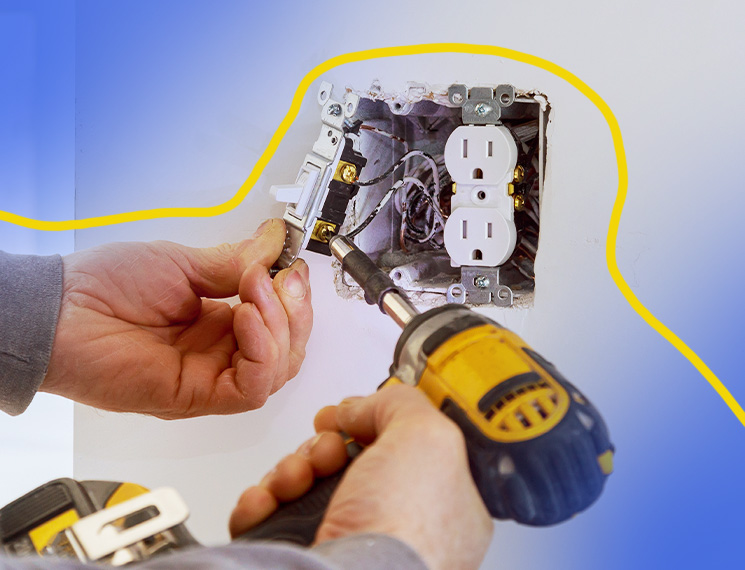
Swapping a battery alarm is a two-minute job. Hardwired alarms are a different matter. Replacing them means turning off the correct breaker, confirming the circuit is dead, and connecting the new harness correctly so interconnection still works. Adding alarms to rooms without wiring, converting a battery-only home to hardwired, or sorting out alarms that will not interconnect is squarely electrical installation territory.
Two other situations deserve a call. If a hardwired alarm keeps chirping with a fresh battery and a known-good unit, the wiring or circuit may be the problem, which makes it an electrical repair question. And if your home is old enough to have aluminum branch wiring, read about the risks of aluminum wiring in Phoenix homes before anyone connects new devices to those circuits. Always turn off the breaker before touching a hardwired alarm, and if anything looks scorched or smells hot, leave it off and call.
“Armando was at our house yesterday to update and install hard-wired smoke detectors. We’re very satisfied with his service, promptness and cleanliness.”
Ready to Update the Smoke Alarms in Your Phoenix Home?
If your alarms are past their date, do not interconnect, or you want hardwired coverage in rooms that never had it, Gideon Electric can handle the job and leave you with a system that actually wakes the house. Call (480) 716-3272 or reach us through our contact page to set up an appointment.
Frequently Asked Questions
How often should smoke detectors be replaced?
Why does my smoke detector chirp after I changed the battery?
Are hardwired smoke detectors better than battery ones?
Can I replace a hardwired smoke detector myself?
Talk to Gideon Electric
Local electricians serving Phoenix and the Valley.