
Holiday Lights Tripping the GFCI? Here Is Why and What to Do
Every December, Valley homeowners string lights along the roofline, plug them into one patio outlet, and watch the GFCI or breaker trip. The cause is usually one of three things: moisture in a connection, too much load on one circuit, or a worn GFCI. The good news is that you can estimate your load from the label on each strand. Here is how to find the cause, and when the real fix is a dedicated outdoor circuit.
Why the GFCI or Breaker Trips
Outdoor outlets in the Valley are protected by GFCIs, and a GFCI trips for a reason. With holiday lights, three causes show up again and again.
Moisture in a connection. Rain is rare here, but it does fall in winter, and dew and sprinklers can wet a plug junction left on the ground. Even a little water in a connection can leak current and trip the GFCI.
Too much load on one circuit. Lights, inflatables, and decorations all pull current. Add them up on one circuit and you can pass what the breaker is built to carry. The circuit may also feed other outlets, such as a garage fridge, that you forgot about.
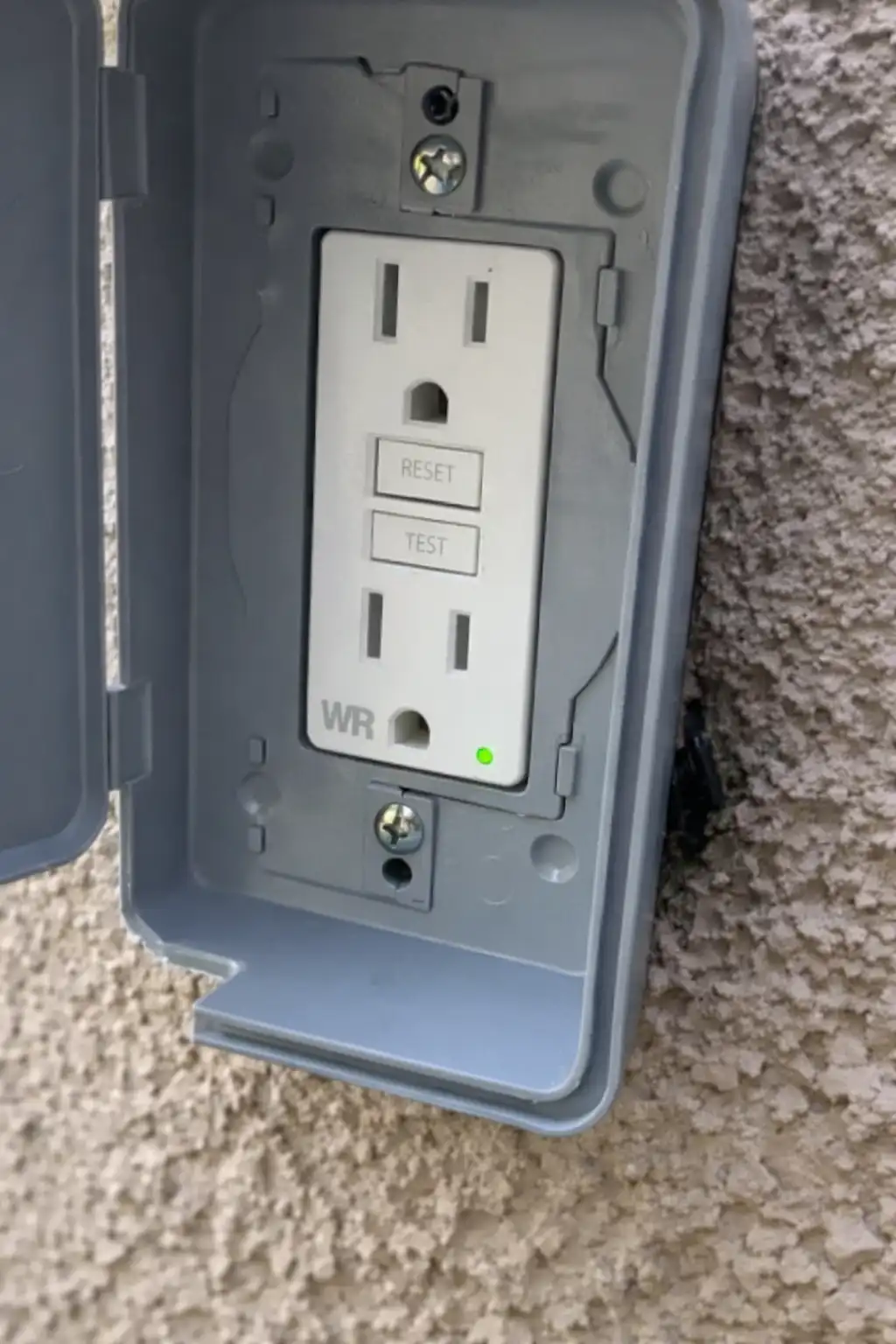
A worn GFCI. GFCI devices wear out. An older one can trip at the smallest load, which is why it may act up in December when it sits idle the rest of the year.

Estimate Your Load From the Label
Every strand of lights has a tag near the plug listing its wattage or amperage. You can use it to estimate the load. A standard household outlet circuit runs at 120 volts, so divide the watts on the tag by 120 to get amps. Add the amps for everything on the circuit.
A common 15-amp circuit can carry 15 amps, but the general guidance from electricians is to keep a continuous load, like lights that stay on for hours, to about 80 percent of the breaker’s rating. On a 15-amp circuit, that is about 12 amps. Incandescent strands draw far more than LED strands, which is why the same display that trips a breaker with old-style lights can run fine on LEDs. We cannot give you a fixed number of strands, because it depends on the labels in your hand and on what else shares the circuit.
LED strands use far less power than old-style strands
Relative energy use of a holiday light strand. Less load on the circuit means less chance of tripping.
Indexed so the incandescent strand equals 100; the LED bar is 100 minus the 70 percent saving DOE reports. Real strands vary by length and brand, so read the label on yours. Source: U.S. Department of Energy, “How Do Holiday Lights Work?”, 2015.
Remember to count everything else on that circuit. In many Phoenix homes, the outdoor outlet on the front or back patio shares a circuit with a garage outlet, a bathroom, or an exterior wall on the other side of the house. A freezer in the garage, a power tool charger, or a pool cleaner plugged in nearby uses part of the same limit. Inflatables with a blower motor add more, and motors draw extra current when they start. If you are not sure what shares the circuit, turn off the breaker for the outlet and see which other outlets and lights go dead.
How much can one outlet circuit safely carry?
The breaker rating is the most the circuit can deliver. Lights that stay on for hours should stay under the lower bar.
Remember: everything on the circuit counts toward the ceiling, including a garage freezer or a charger you forgot about.
Watts are amps times 120 volts. The 80 percent ceiling follows the National Electrical Code limit for plug-in (cord-and-plug) equipment; a continuous load is one that runs three hours or more. Your local code and your own panel may differ, so an electrician should confirm what your circuit can carry. Source: IAEI Magazine, “Article 210, continued” (Randy Hunter), 2012.
Find the Strand Causing It
To find what is tripping the GFCI, work in order:
- Unplug everything on the outlet and any extension cords.
- Press RESET on the GFCI. If it trips with nothing plugged in, the GFCI or the wiring is the problem, so stop and call an electrician.
- Plug in one strand at a time and wait a few minutes. If a single strand trips it, that strand has damaged insulation or a wet connection.
- Add strands back one at a time. If they all work alone but trip together, you are overloading the circuit.
Do not replace a tripping GFCI with a regular outlet to make the problem disappear. The trip is the protection working.
“This time he fixed our outdoor outlets and solved a possible shorting issue! He is incredibly professional and takes the time to explain how things work for those of us who don’t know much about electricity.”
Cords, Covers, and Connections
A few habits prevent many trips. Use cords and lights rated for outdoor use. Keep plug connections off the ground and out of puddles or sprinkler spray, and use a weatherproof cover or connection box. Follow the maximum number of strands that can be connected end to end, which is printed on the label. Never run a cord through a closed window or door in a way that pinches it.
Check the cords and plugs before you hang anything. Cracked insulation, bent plug prongs, and warm connections are reasons to throw a strand away. For the difference between a GFCI and an AFCI, and where each belongs, see our guide to GFCI and AFCI outlets.
When to Add a Circuit or an Outlet
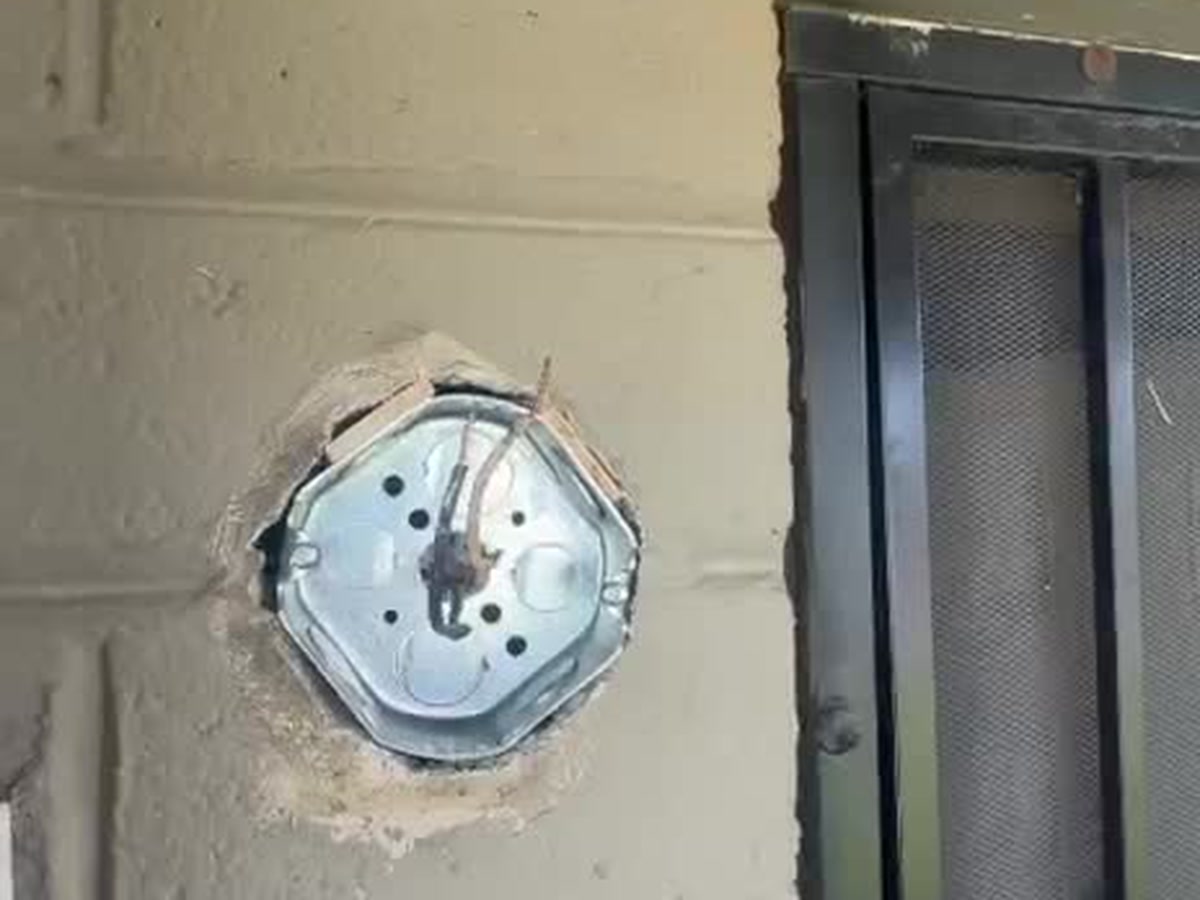
If your display trips every year, if you want a larger display, or if the only outlet near the front of the house is also feeding other things, plugging more in is not the answer. The fix is more capacity. That can mean a dedicated outdoor circuit for lighting, more weatherproof outlets where you actually need power, or a timer that controls the display.
A licensed electrician can look at your panel and the existing outdoor wiring and tell you what is practical. Gideon Electric handles outdoor lighting, and we can add new exterior power through outlet and switch installation. Call (480) 716-3272 or request service online.
Frequently Asked Questions
How many amps do Christmas lights use?
How many Christmas lights can I plug into one outlet?
Why does my outdoor GFCI trip when it rains or after watering?
Can I use an indoor extension cord for outdoor lights?
When do I need a new outdoor circuit?
Need Better Power for Outdoor Lights?
Local electricians serving Phoenix and the Valley. We add outdoor outlets and circuits that are safe and built to last.